
Streamwood Directory Collections by Era
Streamwood has no verified continuous printed city directory run in the official sources reviewed. The reliable shelf is broader: Poplar Creek's local history, confirmed school annuals, and regional institutions whose catalogs must be checked for suburban scope. The gap should remain visible because Chicago coverage cannot be silently assigned to Streamwood.
| Collection | Verified years | Where held | Access |
|---|---|---|---|
| Streamwood local-history records | Before 1957 and 1957-present collection labels | Poplar Creek Public Library | Free digital browser and physical room |
| Streamwood High School Sabre yearbooks | 1979, 1987, 1990, 1992, 2001, 2004 items verified | Poplar Creek Quartex and selected physical copies | Online item browsing; ask library about other years |
| Chicago city directories | 1839 through 1928-29, with listed gaps | Newberry microfilm and inventory | Primarily Chicago; verify suburban scope |
| Regional house-history sources | Directory, phone-book, criss-cross, and census runs described | Chicago History Museum | Research center and catalog; scope check required |
| Printed Streamwood city directory | No official run verified | Search Poplar Creek, Newberry, and WorldCat catalogs | Confirm title and year before use |
Newberry lists Chicago runs for 1839, 1844, 1849-50, 1851, 1853-57, 1859-68, 1870-1917, 1923, and 1928-29. Those dates describe Chicago volumes. They are only Streamwood leads when a catalog record or page confirms Cook County suburban coverage.
Find Streamwood Names Before 1957
Streamwood's earlier people trail sits under place names that predate the Village. Dairy farms covered the area from the nineteenth century into the 1950s, and the local history describes roughly 800 people across dozens of farms at the 1950 Census. Search Hanover Township and Hoosier Grove alongside family names. Farm-road terms such as Bartlett, Schaumburg, and Oltendorf may also reach records that a modern Streamwood query misses.
The Poplar Creek collection browser makes the divide explicit with separate “Streamwood Before 1957” and “Streamwood 1957-Present Day” groupings. This is a geographic search clue. It reflects the farm-to-subdivision transition, not merely a catalog design choice.
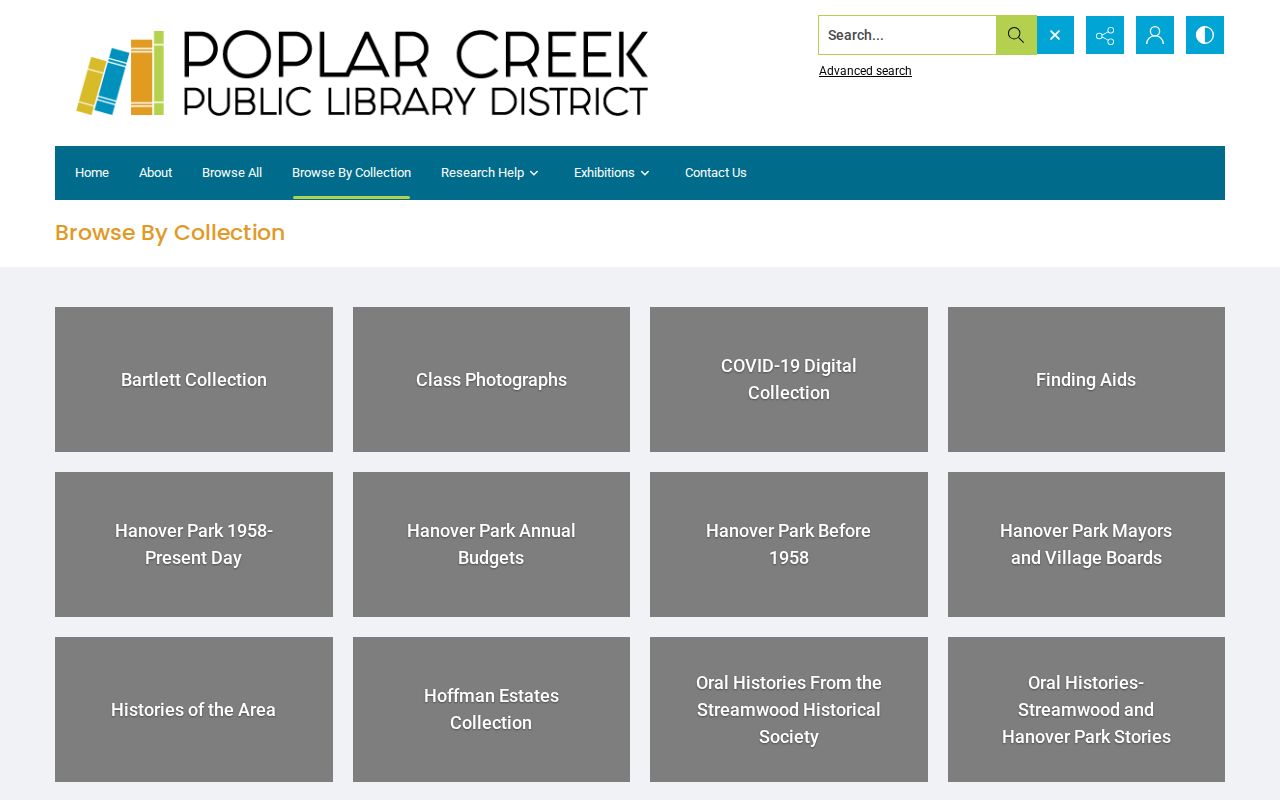
The collection labels direct an early family search toward township-era material before moving into Village files.
Browse Streamwood Local History
Poplar Creek Public Library's digital local history is the strongest Streamwood-specific directory collection. Its policy covers residents, Village government, businesses, institutions, and organizations. Formats include books, photographs, maps, manuscripts, newspapers, serials, pamphlets, oral histories, government and group records, and scrapbooks. Some items remain physical, so contact local history staff before a visit.
The named online groups include annual budgets, mayors and Village boards, Village and Park District newsletters, records on microfilm, and oral histories from the Streamwood Historical Society. Library board material also points to Streamwood Examiner newspapers, 1970s and 1980s park scrapbooks, clippings, physical annuals, and converted audio interviews. These sources preserve names in civic and family context even when no city directory listed them.
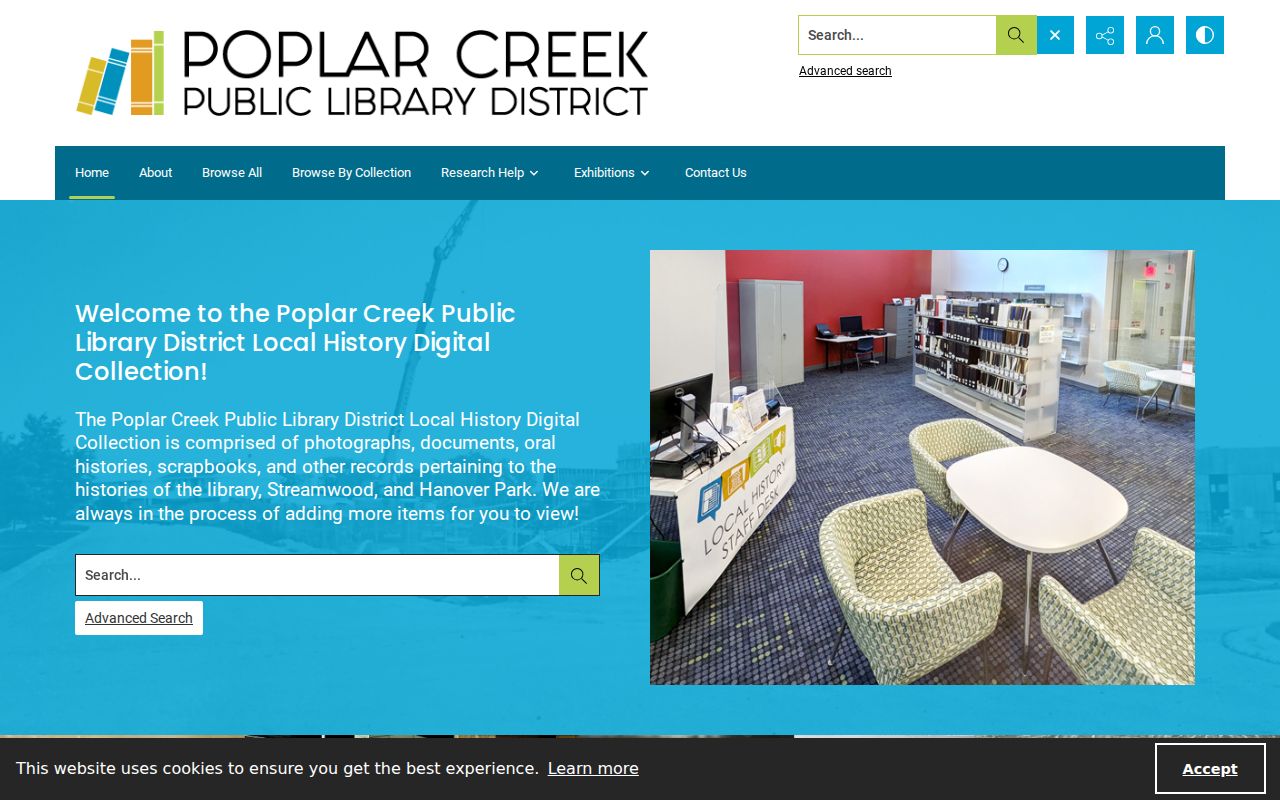
The search screen connects item records, images, transcripts, and collection labels, which helps separate a verified item from a broad collection date.
Search Streamwood Yearbook Directories
Verified Streamwood High School Sabre item pages exist for 1979, 1987, 1990, 1992, 2001, and 2004. Each is attributed to Poplar Creek Public Library District and grouped under the high school and post-1957 Streamwood collections. Depending on the item, the interface supports image or section browsing and may offer searchable transcript text created through optical character recognition.
Search a full name, surname, activity, club, or page caption, then inspect the image. OCR can misread stylized type, initials, and crowded lists. A yearbook entry proves a school-year link, not a current address. When reconnecting classmates or researching family history, pair the entry with a dated newspaper, directory, vital record, or other primary source before drawing a wider conclusion.
Note: The broad collection label does not prove that every year is digitized; ask Poplar Creek about physical copies and newly added items.
Read a Streamwood Directory Entry
No printed Streamwood directory image was available for a verified sample-entry inspection. When a real suburban or county volume is found, photograph the title page, date, geographic scope, and abbreviation key before copying names. That preserves the evidence needed to decide what each mark means.
| Name | Surname, given name, or initials exactly as printed |
|---|---|
| Spouse | A parenthetical name only when the volume defines that convention |
| Historical occupation | A period index field that may include an employer |
| Address | House number and street in the volume's dated form |
| Household mark | Owner, renter, boarder, or widow notation only if the key defines it |
| Citation | Volume, year, page, image, and holding institution |
- Criss-cross directory
- A volume or section ordered by address, letting a researcher move from a street number to a listed occupant.
- Householder index
- An address-based list of the person treated as the main listed resident under that publisher's rules.
- Abbreviation key
- The publisher's own legend for initials and symbols, which should control interpretation.
Hear Streamwood Community Memory
Poplar Creek separates Streamwood Historical Society interviews from its “Streamwood and Hanover Park Stories” oral-history project. Interviews can supply married names, street memories, institutions, and event context that no printed listing captures. They are recollections, so corroborate a date or legal fact with a record created near the event.
This is also a humane reconnect route. An adult with a local story can contact the library to contribute or ask about access, and staff may be able to forward a message without releasing a private address. Early Village records were kept at officials' residences and in temporary buildings before permanent offices opened, which helps explain why a donated photograph, scrapbook caption, or oral history may preserve a name absent from a formal municipal index.
Extend a Streamwood Directory Search
The Newberry city directory guide organizes holdings by geography and date and includes city, county, business, society, professional, and telephone directories. Use its Chicago run as a regional lead, then confirm that the actual volume covers Streamwood or Hanover Township. A title that says Chicago alone cannot fill the local printed-directory gap.
The Chicago History Museum archives include correspondence, diaries, financial and group records, minutes, membership lists, scrapbooks, sermons, and oral histories about Chicago, suburbs, Illinois, and the region. Research-center access is free, though retrieval policies can require advance planning.
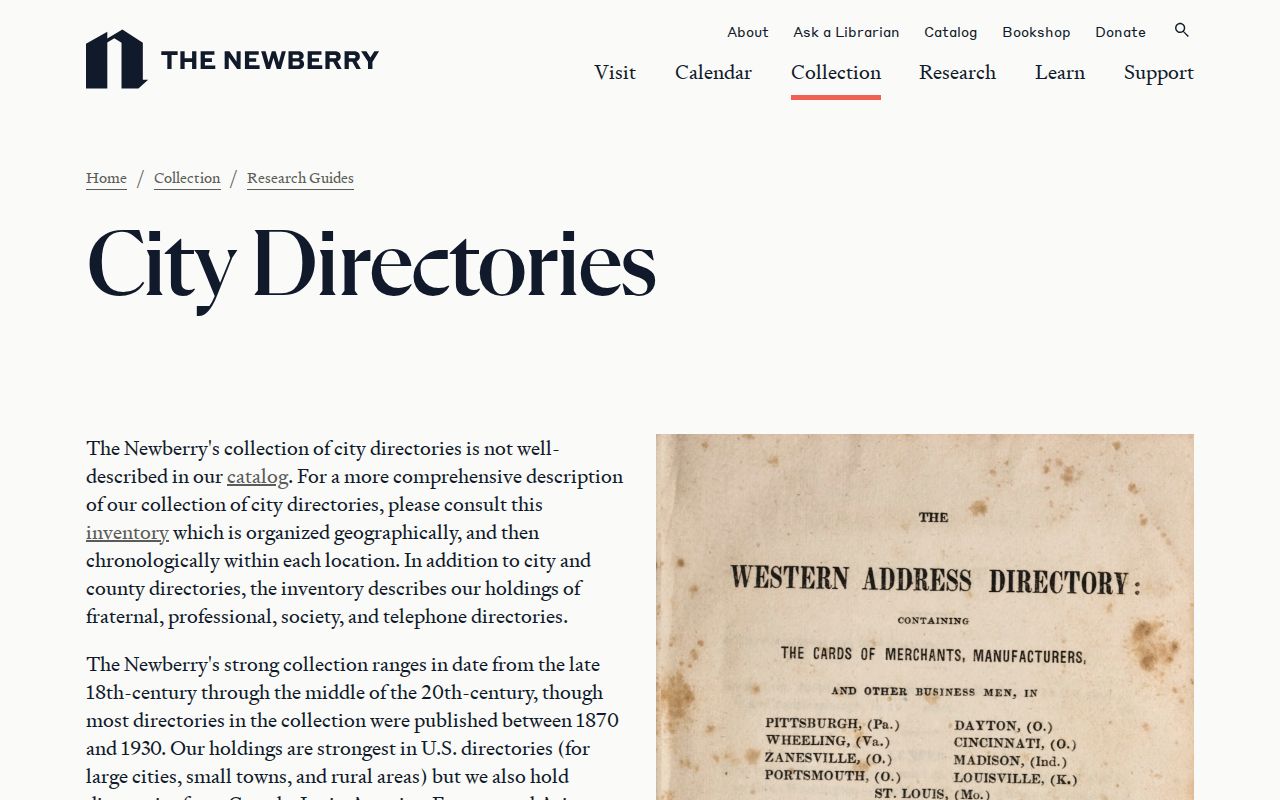
The inventory method is valuable because it forces a geography check before a regional directory is cited for Streamwood.
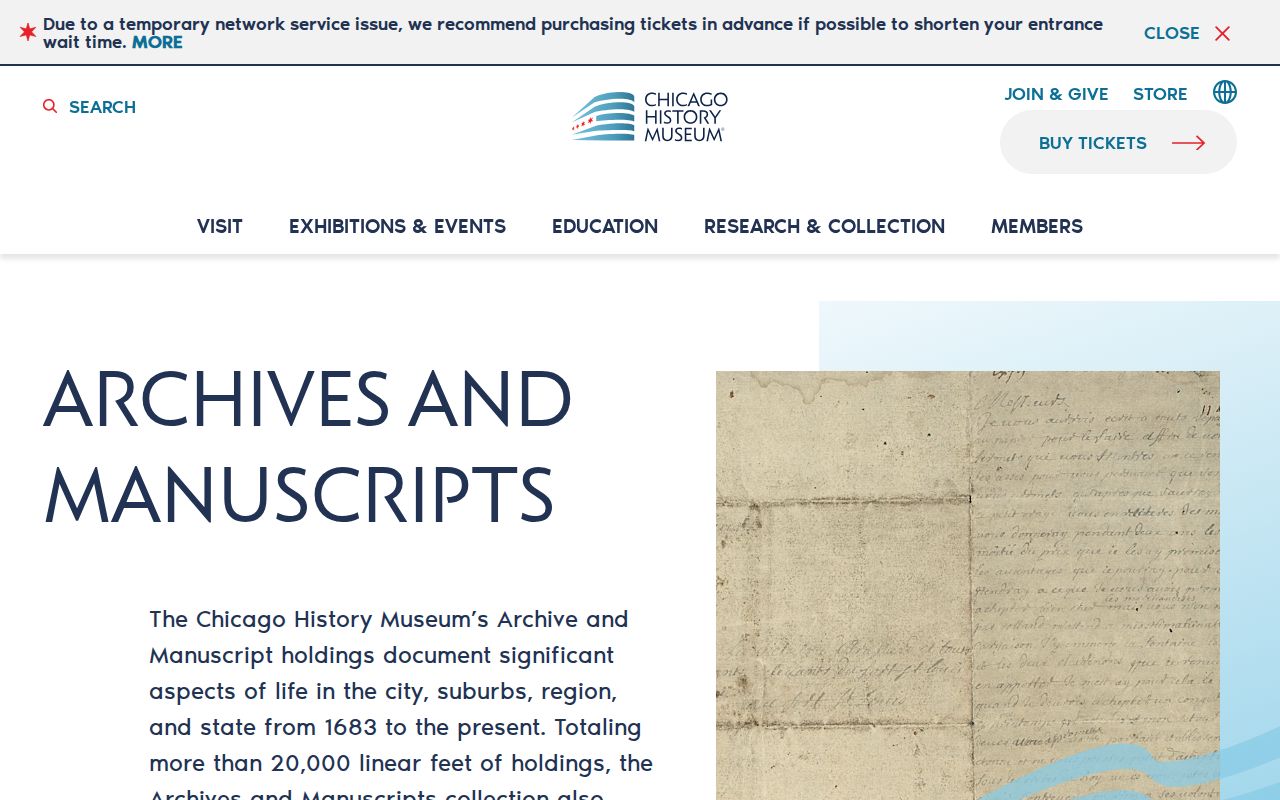
The museum's regional scope adds family and organization records, but its catalog entry must still establish relevance to the person and place.
Streamwood Records Find Permanent Homes
The Village and library developed together, which explains the modern collection's shape. Streamwood incorporated in 1957. A 1966 referendum created its library, a storefront opened in 1967, the district formed in 1971, boundaries became official in 1973, and the main building opened at 1405 S. Park Avenue in 1978. Federal and state depository status followed in 1980.
| Year | Local record milestone |
|---|---|
| 1957 | Streamwood becomes an incorporated Village |
| 1966 | Library referendum establishes the first formal library trail |
| 1967 | Storefront library opens |
| 1971-1973 | District forms and its boundaries become official |
| 1978-1980 | Main library opens, then gains depository status |
For early names, municipal minutes, photographs, and oral-history files may substitute for a missing annual city directory. Keep the item date and creator in the citation.
Trace Family Through Streamwood Directories
A printed listing is one dated snapshot, not a full family tree. Build a timeline that keeps directory entries, school books, census records, deeds, newspapers, obituaries, and probate files in separate source columns.
- Start with an exact name and a year in a confirmed Streamwood or scope-checked regional source. Save the page and abbreviation key.
- Search two or three years on either side, trying initials, spouse names, the address, Hanover Township, and Hoosier Grove.
- Bridge to an available federal census year, then compare household names and the period address without assuming identical boundaries.
- Use county deeds from 1985 forward to test owner continuity. Older land work requires tract books or office research.
- Use newspapers, an obituary, or probate only to explain a gap supported by the record itself. Disappearance can also mean a move or an unlisted entry.
For modern address-keyed research, the Streamwood street directory owns the assessor, parcel map, and deed chain. Historical work remains centered on the collections, their dates, and their true geographic reach.